OUROBOROS
(2025)
Solar-powered audiovisual installation and performance
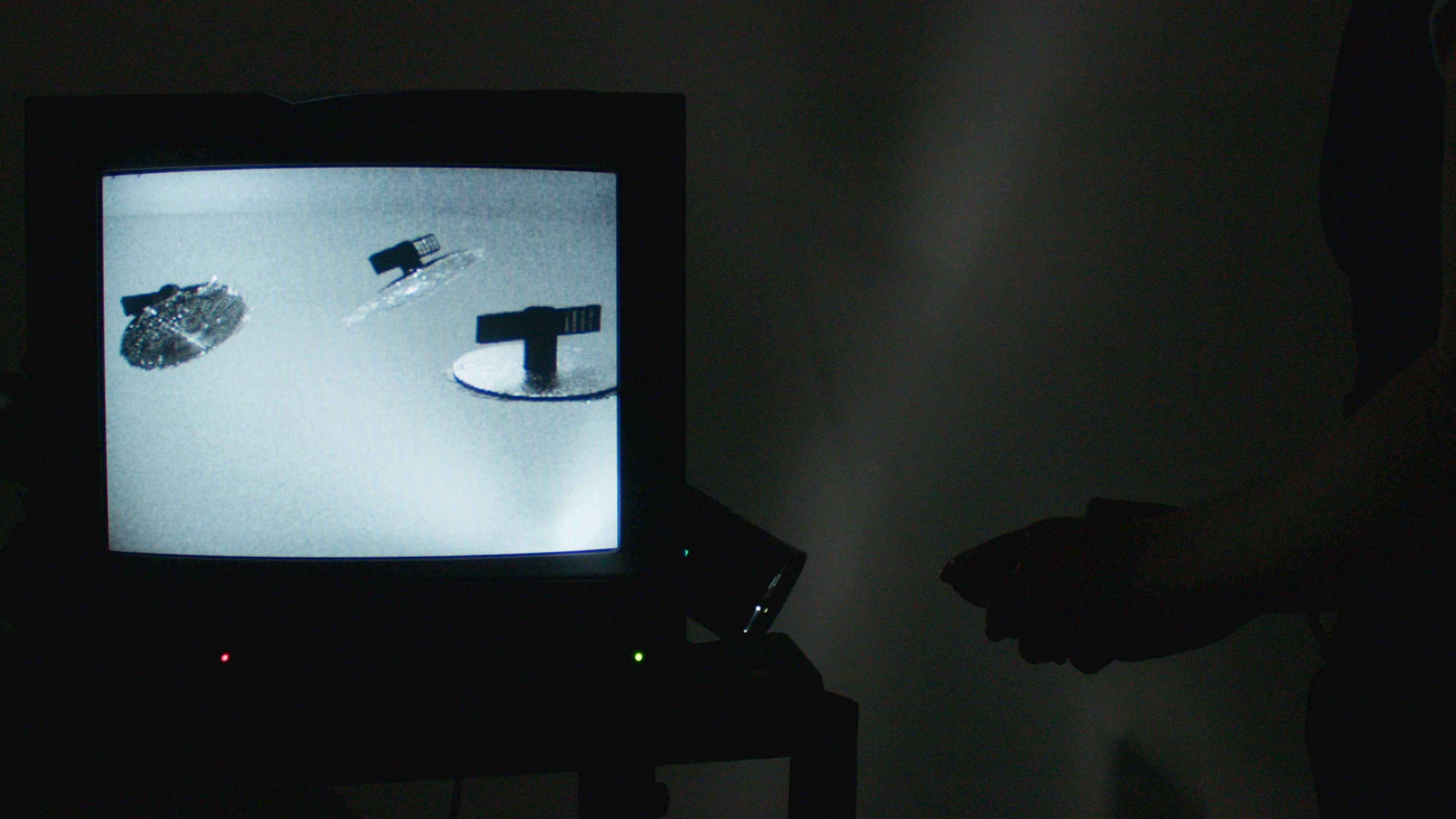
The installation Ouroboros explores the science-fiction genre in its narratives and making-processes in the form of a film set. It tells a dystopian speculative story of humanity on Earth dealing with constantly shifting sunlight caused by an uncontrollable constellation of space mirrors around the globe. Who has the right to sunlight? The hanging space mirrors in the exhibition space transform into cinematic miniatures in the projected footage, referencing the very first Star Wars films. By merging contemporary science-fiction narratives with past film equipment from the 1990s, the installation reflects on how science-fiction as a genre can be further or re-explored. The audience is invited behind the scenes of creating analogue visual effects in the present day performed by the artist herself.
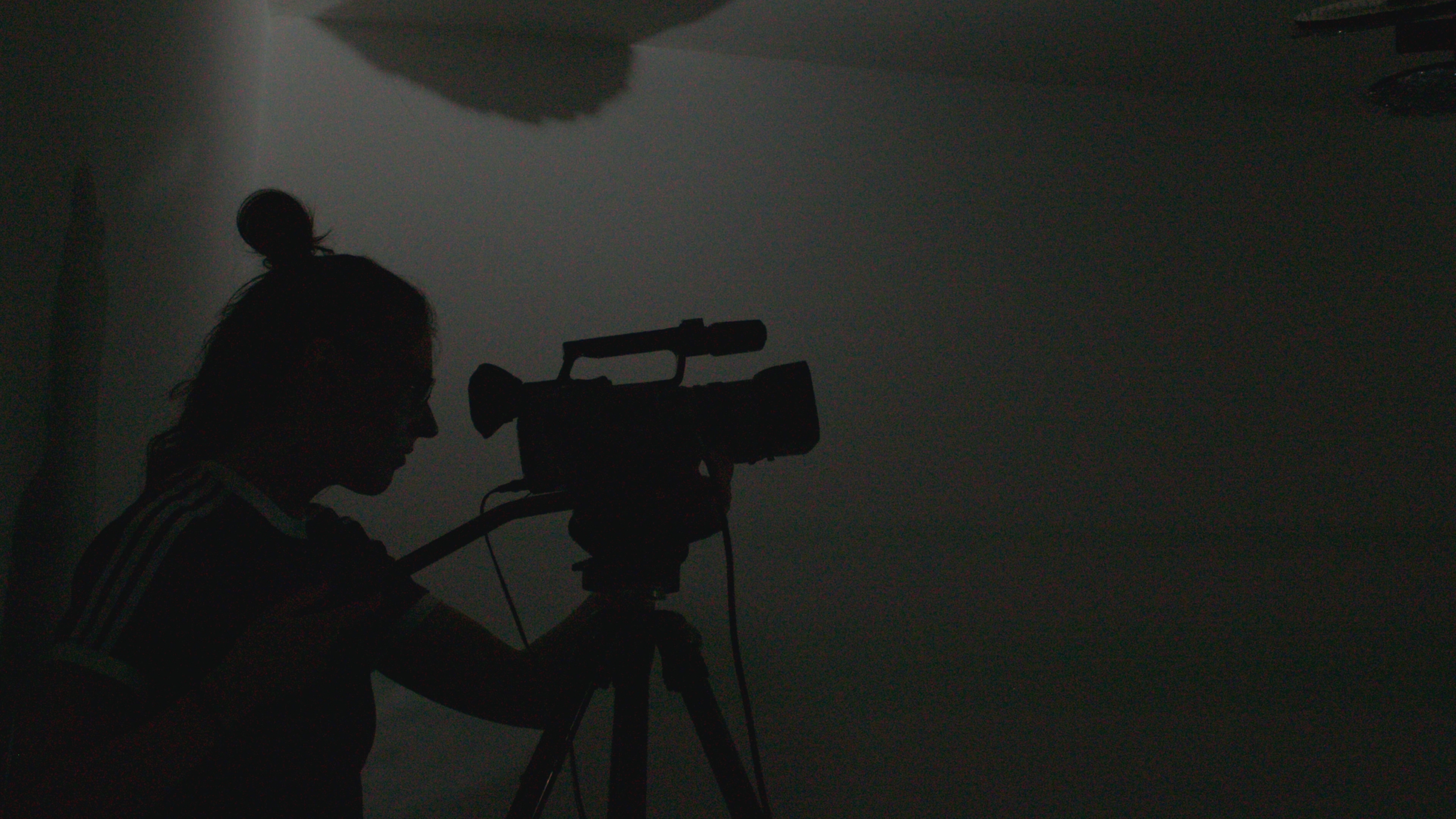
In the early days of the science-fiction genre, scientific innovations such as space mirrors were explored as speculative technological narratives to tell stories of imagined futures. To create these narratives, science-fiction films in the 1980s constructed speculative technologies with analogue visual effects. Nowadays, science-fiction is used more to reflect on already existing technologies, innovations and events within the digital sphere. But how can we re-think science-fiction narratives of our future, what role does technology play in these stories, and how can we expose normally hidden speculative image-making processes?
Starting from a theoretical concept, space mirrors became the subject of science-fiction writers in the 1920s and were later experimentally launched into space in the 1990s. What was once an imaginary idea of orbital objects reflecting sunlight became a functioning instrument against time and sunlight. From this historical review, in which speculation and material reality intersects, the idea of Ouroboros was shaped.